
Breaking Down the Global Metal Waste Crisis by the Year
Every year, we’re tossing out over 2 billion tons of scrap metal. Wild, right? And yeah, that number’s still going up. Tech’s evolving, more cars on the roads, more buildings going up:
you get it. It’s not just random junk either. It’s actual metal. Valuable stuff. But instead of being reused, a lot of it is ending up in landfills. Piling up. Wasting space, hurting the environment. How’d we even get to this point? Innovation, sure.
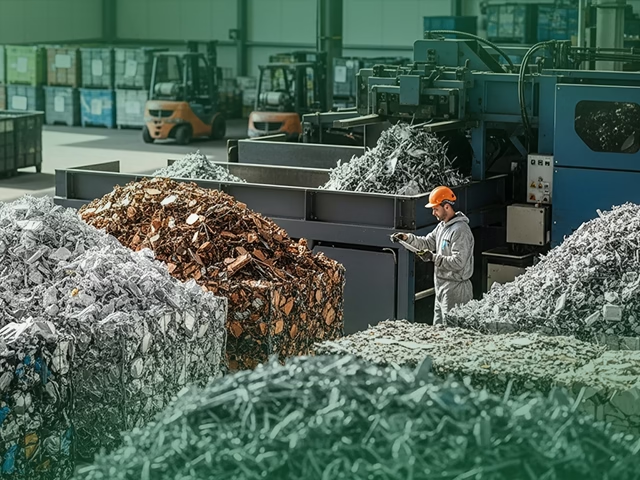
Industry boomed, we built everything with aluminum, steel, copper, you name it. But somewhere along the way, we stopped paying attention. We had the tools to recycle, but the systems? They didn’t keep up. Now we’ve got this massive backlog, and no one really knows what to do with it fast enough.
The Environmental Toll
Improper disposal of scrap metal is not just unpleasant to look at, it actually poses real risks. Toxic substances begin to seep into the ground over time, affecting soil quality, and then, of course, water sources too. And metals like mercury, lead don’t just go away. They stick around, get absorbed into plants, into animals, and, eventually, into us. The effects are widespread. Rivers get polluted, fish populations start to collapse, and in some areas, nothing grows at all. These so-called “dead zones” aren’t just dramatic headlines, they’re happening. And then there’s the air quality. When metal waste is burned, or incinerated, it sends harmful fumes into the air, which don’t stay put. They travel. People miles away, with no connection to the original site, still feel the impact.
Metal’s Superpower
Here’s something worth noting, metal, unlike paper or plastic, doesn’t really wear out when it’s recycled. It just keeps going. Aluminum, steel, copper, those can be melted down and reused over and over without losing strength or quality. That alone makes metal kind of essential in this whole circular economy idea we keep hearing about. And why does that matter? Well, because every time we recycle metal, we’re actually avoiding the huge energy demands that come with producing new metal from raw ore. We’re talking about saving up to 90% of that energy. Which also means fewer emissions, less digging and disruption from mining, and just….a lighter impact overall. Bottom line, metal recycling isn’t just useful. It’s one of the most practical tools we’ve got right now to push back against the global waste problem.
By the Numbers
The figures are both grim and remarkable. Over 400 million tons of scrap metal are recycled annually worldwide, supporting a sector valued at over $900 billion. Roughly 80 million tons of steel are recycled each year in the US alone, whereas aluminum cans have a recycling rate of roughly 71%. However, there is still more work to be done. Millions of tons of scrap metal still wind up in landfills each year, and less than one-third of all metals have recycling rates higher than 50%. The problem is obvious: we need to increase recycling rates and ensure that everyone can recycle metal.
Where’s the Closest Metal Recycling to Me?
If you’ve ever wondered, “Where’s the closest metal recycling to me?” you’re not alone. Accessibility really does make a difference when it comes to recycling rates. These days, more local centers and scrap yards are opening up, kind of gradually, but you start to notice them, in different neighborhoods, which makes the whole process less of a hassle. You’ve got old cables, a broken appliance, empty cans; it’s all easier to deal with now.
But it’s not only about making it convenient. When people actually know where to go, they’re more likely to do something about it. That goes for businesses too. A lot of centers now have websites or even apps, some kind of directory, to help you find the closest drop-off spot. So that old toaster? It doesn’t really need to end up in the trash. You’ve got options, you just have to check.
Which Recycling Pays the Most?
Let’s talk about money. Not all recycling is created equal, and if you’re looking to turn waste into wealth, scrap metal is king. So, which recycling pays the most? The answer: non-ferrous metals like aluminum and copper. These materials are in high demand and can fetch over $2 per pound in some markets. Aluminum cans are a classic moneymaker, with recycling centers paying between $0.40 and $0.70 per pound, depending on location. Copper wiring, brass fixtures, and stainless steel appliances are also valuable. To maximize profits, separate your metals and check local prices before heading to the recycling yard.
Closing the Loop on Metal Waste
Picture this for a moment: a world where nothing actually gets thrown away. In a fully circular economy, every bit of metal is collected, recycled, and used again… just in a different form. It sounds ideal, but honestly, it’s not just some hopeful vision, it’s becoming more of a necessity. By keeping materials in use, we can rely less on mining, bring emissions down, and even open up more jobs in the recycling space. But getting there? It’s going to take effort across the board. Individuals sorting things at home, companies rethinking how products are built, especially with disassembly in mind. Every step plays a role. If we can shift how we handle metal waste, this whole issue could become less of a crisis and more of a chance: to do things better, more sustainably.
Conclusion
Ready to make a difference? Start by recycling your scrap metal, from soda cans to old electronics. Look up the closest metal recycling to me and make it a habit to drop off your metals instead of tossing them in the trash. Remember, every can counts! Curious about “does metal recycle forever?” The answer is yes for metals like aluminum, steel, and copper, so your efforts have a lasting impact. And if you’re wondering which recycling pays the most, focus on non-ferrous metals for the best returns.
If you’re in the market for reliable, eco-friendly metal recycling, check out ARM Metal Recycling. We’re committed to making metal recycling easy, profitable, and sustainable for everyone. Turn your scrap into cash and help build a cleaner planet, one metal at a time!